
You Cannot Think Your Way Into Sleep
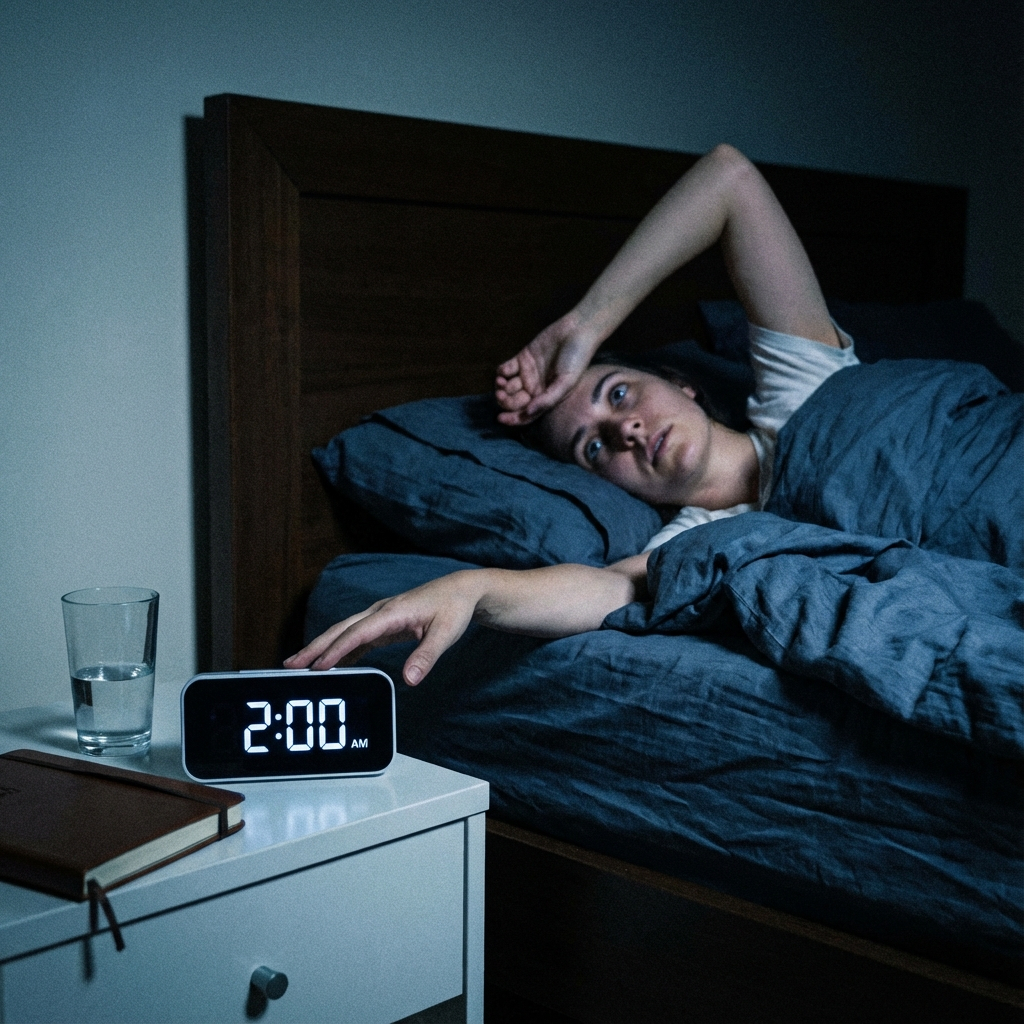
I used to lie awake at 2 AM, mind racing, trying to force myself to sleep through sheer willpower.
It never worked.
The harder I tried to quiet my thoughts, the louder they became. I’d run through breathing techniques, mental exercises, visualization practices. Nothing changed the fundamental problem: I was trying to solve a body problem with my mind.
The asymmetry is built into your nervous system. You can force yourself awake with caffeine, stress, or willpower. But you cannot force yourself asleep the same way.
Sleep only arrives when your body shifts into the right state.
The System That Won’t Take Orders
Your nervous system operates on two modes: sympathetic (alert, active) and parasympathetic (rest, recovery).
When you transition from wakefulness to sleep, parasympathetic activity increases. Your heart rate drops. Your body relaxes. This isn’t a decision you make. It’s a coordinated physiological event.
Research shows that people with insomnia have lower vagal activity during sleep onset. Their heart rate stays elevated. Their heart rate variability stays suppressed. The racing mind is a symptom, not the cause. Your body is stuck in the wrong state.
If your sympathetic system remains even slightly dominant, it blocks the parasympathetic system from doing its job. The increased norepinephrine circulating in your system actively inhibits sleep, while acetylcholine (which promotes relaxation) can’t gain traction.
You can artificially trigger arousal. But relaxation must emerge from your body’s own coordination.
What I Got Wrong About Energy
I used to think caffeine equaled energy. More caffeine meant more capacity to perform.
My pattern looked like this: first cup at 4:30 AM, another around 8 AM, one at 11 AM, then another at 2-3 PM.
I felt jittery. My focus scattered. I jumped between tasks without finishing anything. I didn’t connect those symptoms to my nervous system paying a price I couldn’t see.
The shift came when I started moving at lunch: yoga, running, walking. I naturally wanted less caffeine after that. The movement replaced the need for stimulation.
When I cut off caffeine earlier in the day, something changed. Not just my sleep that night, but my energy the next day. The problem wasn’t the caffeine itself. It was the timing.
The Body-First Protocol
Once I realized I was overstimulated and couldn’t think my way down, I stopped trying to fix it mentally.
I started with deep breathing. That’s when I first noticed how overstimulated I actually was. My body was running hot in ways my mind couldn’t detect from the inside.
Then I added more movement. More yoga. More exercise. More sweating. Getting outside with fresh air and natural light.
These practices didn’t work because they tired me out. They worked because they shifted my nervous system state. My body learned a different baseline.
I also changed my light exposure. I quit corporate work and the overhead office lights that came with it. I started watching sunrise and sunset. More natural light meant better sleep, which meant better days.
The pattern became clear: when I coordinated my inputs with my body’s natural rhythms instead of overriding them, everything stabilized.
Why Racing Thoughts Are a Body Signal
Research reveals something important: racing thoughts at bedtime are associated with insomnia severity, but rumination and worry are not.
The distinction matters.
Racing thoughts aren’t just mental noise. They’re a physiological marker that your body is in the wrong state. Your nervous system is still running the arousal program when it should be running the rest program.
When you try to solve this by thinking harder, analyzing more, or forcing mental quiet, you’re using the wrong tool. You’re asking your mind to override a body-state problem.
The only way through is to change the state itself.
The Timing Variable
Most performance problems are disguised alignment problems.
You can optimize your sleep environment, perfect your bedtime routine, and track every variable. But if your nervous system spent the entire day in sympathetic overdrive, no amount of optimization will force the parasympathetic shift you need.
The solution isn’t trying harder at night. It’s coordinating your inputs throughout the day so your body arrives at night in a state where sleep becomes possible.
Morning light exposure. Movement that creates real physical demand. Caffeine timing that respects your nervous system’s capacity. Evening wind-down that doesn’t fight against hours of accumulated activation.
Sleep doesn’t respond to willpower. It responds to rhythm.
What Actually Works
You need to shift from trying to control your mind to coordinating your body’s state.
Start with light. Get morning sunlight within an hour of waking. Watch sunset when possible. Reduce artificial light at night, especially overhead lighting and screens.
Move your body in ways that create real physical demand. Not exhaustion, but demand. Sweating, elevated heart rate, the kind of movement that reminds your nervous system it has a body to coordinate.
Cut off caffeine earlier than you think you need to. If you’re drinking coffee past noon and struggling with sleep, that’s your first variable to test.
Build in transition time before bed. Not a routine you force yourself through, but actual space for your nervous system to downshift. This might be 30 minutes. It might be two hours. The timeline matters less than the consistency.
Track what you can measure: resting heart rate, heart rate variability, how you feel when you wake up. These metrics tell you what your mind cannot: whether your body is actually recovering or just going through the motions.
The Real Shift
I spent years trying to optimize my way to better sleep. Better supplements, better routines, better mental techniques.
None of it worked until I stopped treating sleep as something I could control and started treating it as something my body coordinates when the conditions are right.
This realization shaped how I built Awaken Rituals. Our circadian-based coffee is designed around timing, not intensity. The right amount of caffeine at the right time, supporting your morning energy without sabotaging your evening wind-down. It’s not about maximizing stimulation. It’s about coordinating with your nervous system’s natural rhythm so you’re not fighting your own biology when it’s time to sleep.
The asymmetry is structural. You cannot force sleep the way you force wakefulness. The only path runs through your body, and that changes everything about how you approach the hours before bed.
Stop trying to think your way into sleep.
Start building the conditions that let your body do what it already knows how to do.